Showing posts with label Dana-Farber Cancer Institute. Show all posts

Wednesday, January 30, 2019

Celebrating two momentous birthdays


You might think it odd that I thought tomorrow was my birthday while it’s really today, but you might cut me some slack if I reminded you that I have had five birthdays, and it’s hard to keep them straight.

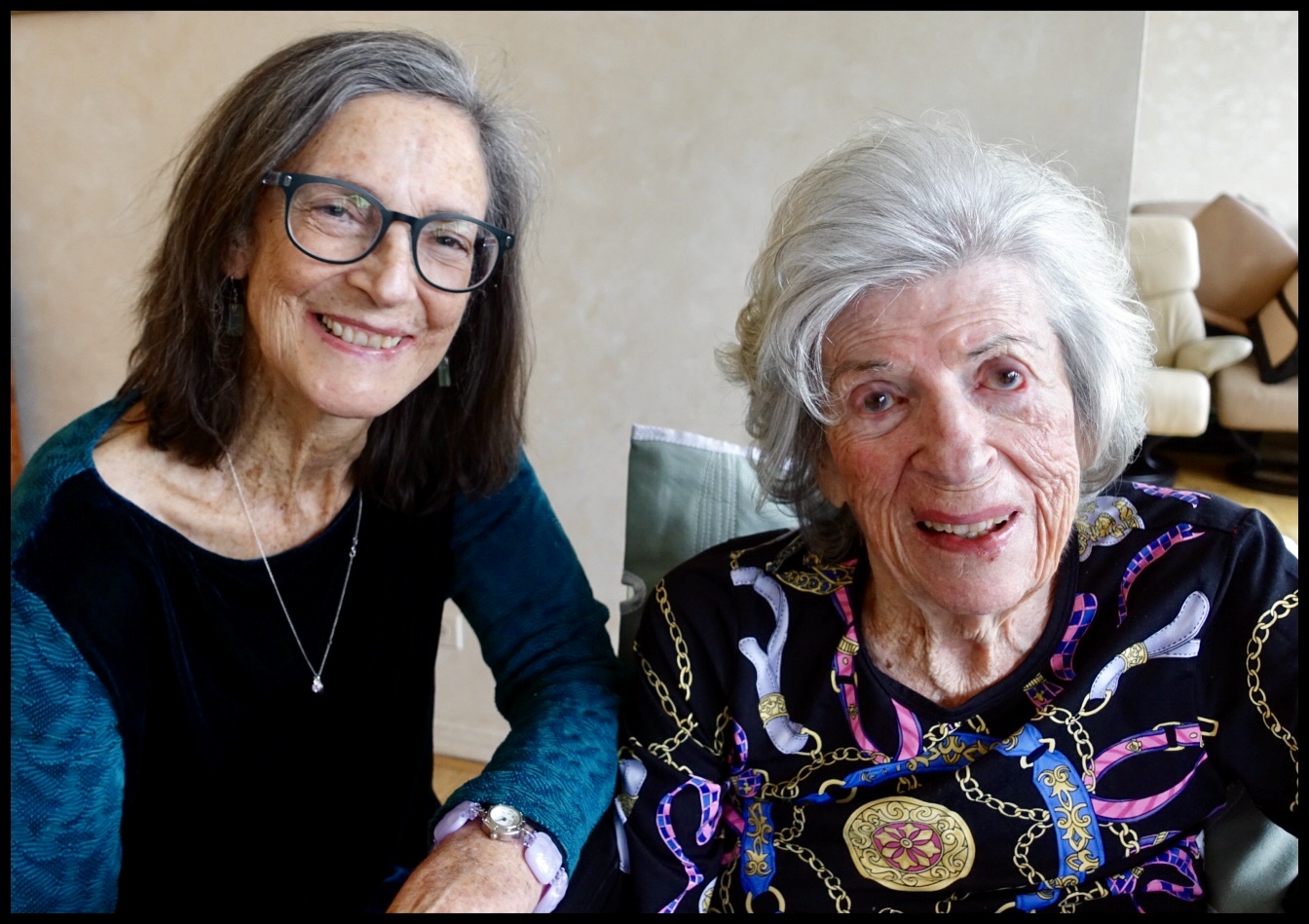
Top, with my donor, Denise Ledvina, in 2011;
bottom, celebrating Marge's 100th birthday this weekend
Today is actually my re-birthday, the 10th anniversary of my fourth stem cell transplant. I didn’t realize it was today until my donor, Denise, sent a happy re-birthday email.

I think I knew at one point that I was off by a day, and I was going to fix it on the blog intro, but then it slipped my mind.

The momentous occasion took place around 9:30 p.m. on Jan. 30, 2009.

My re-birthday dessert
I double checked by looking back at my blog post from the day after the transplant.

It began, “I meant to post yesterday evening at my leisure while awaiting my cells, which I thought were due to arrive at the cell manipulation lab at 9:30 p.m. and would therefore come to me around 11. (Cell manipulation lab sounds so futuristic; I am grateful that in terms of scientific advances, the future is now.) Then Helen, my nurse last night, said they would be ready for actual infusion around 9:30 and that she would begin pre-medicating me at 9 with Ativan and Benadryl, at which point I got all discombobulated and couldn’t eat my dinner, let alone write.

"It’s not that you have to do anything to receive the cells; you just lie there and try to stay calm. But it feels momentous, especially when they hook you up to a monitor tracking your heart rate, blood pressure and oxygen saturation. Of course it also feels enormous because I know how important those cells are to me. The infusion took about 45 minutes and went smoothly most of the way while Helen watched the monitor and me.”

The rest of the evening did not go so smoothly. I wrote,

"The infusion had just about finished when I reacted, either to the cells or to a fever I was going to get anyway. I started shaking vigorously, and my heart rate went up. Helen gave me 25 mg. of Demerol, which didn’t stop the shakes. She paged a doctor who came in quickly. I got another dose of Demerol, more Benadryl, hydrocortisone and some Tylenol. Also they put me on oxygen."

Marge's birthday cakes
I was worried that the cells would not take, but as you can see, they did. I wouldn't be here without Denise, the Dana-Farber Cancer Institute, and The Gift of Life Bone Marrow Registry.

On Dec. 25th, 2008, in a post headlined Downhill all the way, I wrote, after I learned about my second relapse, that I thought it was the end of the road. I was thinking I wouldn't see my children finish growing up, wouldn't see my grandchildren.

I wrote about wandering over to 6A, where I would soon live, asking one of my old nurses, Myra, how I could go through chemotherapy and transplant again.

“Well, you have 48 hours to have your pity party, then you have to quit it and put on your fighting gloves,” she said.

It’s hard to believe it has been 10 years.

In this Philadelphia Inquirer story , I wrote about how Denise's life-saving donation, through The Gift of Life, was inspired by her desire to help the great jazz saxophonist Michael Brecker.

Another momentous event over the weekend was the celebration, on Sunday, of my Aunt Marge’s 100th birthday. A group of us gathered in her apartment for a mid-afternoon party. It was a privilege to be there to mark the occasion and to see her looking so pleased, and so great. You can tell from the smiling faces in the photo that everyone was having a good time.

We had gone down to New York on Friday.

On the way, we had to stop at the dentist. I had catastrophized. I thought I had lost a chunk of my tooth and that meant yet another tooth was disintegrating, but I forgot that I had a filling in said front tooth.

So it was just a filling that had fallen out. He replaced it, and off we went.

View from theater seats
I wanted to go down to Little Italy to an old haunt, Puglia’s Restaurant, so we regrouped and off we went. The food was still good and the singing was still fun. We stopped in for a cannoli at the bakery down the block on Hester Street.

The next afternoon, we went to Lincoln Center to see “My FairLady,” starring Laura Benanti as Eliza and Danny Burstein as her father. It was loverly and magical.

On Sunday before Marge's party, there was brunch in Brooklyn and a walk (more loveliness) through Prospect Park.

Since getting back home on Monday, I've been a little under the weather, but not so much so that I didn't have room for my share of my re-birthday dessert with a couple of special people at Food 101 in South Hadley. 

Sunday, December 16, 2018

10 years ago, it was downhill all the way

Callen and Nell

I haven't been running that much, but yesterday I decided to see how I did with some hills, back and forth to Brunelles Marina. The early registration email from the Saint Patrick's Race committee got me thinking.

A man walking down the road was going faster than I was running. If I were to do it again and didn't want to finish last, I would have to try to figure out how to get a little faster. First of course I'd have to see how I felt going a longer distance. The neuropathy in my feet is not a big help.

When I checked at home, I saw that I had gone 3.8 miles. Then I drank coffee and walked Maddie, for a total of the 6.2 miles, the same distance as the race. Doing it broken up with coffee in between, and a dog walk at the end, would be the way to go.

I thought about how it's coming up on the 10th anniversary of my second relapse of acute myeloid leukemia. Back home, I looked it up in my handy reference, my own blog.

In hindsight I know what was happening. Looking back, I can still feel the grip of uncertainty and panic. Here are some excerpts. Maybe you want more, maybe you don't. If you want the whole post, you can click on the link. For reference, the CMV to which I refer is Cytomegalovirus. It is not dangerous to most people, but it is to people with compromised immune systems like I had.

Dec. 12, 2008, Transfusions and rashes and shakes. I survived the long day at the clinic, but it wasn’t easy. My white count was down to .9 (normal is 3.8-9.2) and my hematocrit was down to 21 (normal is 34.8-43.6). I wondered how I had been able to walk the dog nearly two miles the day before. I guess I was running on reserve power. I needed a platelet transfusion in addition to needing blood; I figured if my platelets were that low, I didn’t really need to know the number, because it would only spook me. This being the third downward spiral after a combination of CMV and Valcyte, the drug used to treat it, they switched me from the Valcyte to a different drug, Valtrex, which looks like a horse pill and needs to be taken four times a day. They said this drug should hold down the CMV but not mess up my counts.

Dec. 16, 2008, Spending some uneasy time in limbo. My counts were still low yesterday: WBC was 1, hematocrit was 24, and platelets were down at the “don’t ask, don’t tell level.” I know I could ask, but for some reason I get especially rattled by low platelet levels. I got platelet and blood transfusions, with 50 mg. of Benadryl and a steroid to stave off a platelet reaction, and ended up staying the night at Diane and David’s, this time being rescued by David because Diane was out of town. It also appears that on top of the already low white count, I may have a virus that is further suppressing my counts. I've had an on-and-off low-grade fever, but I feel OK. Yesterday they sent out some blood samples. So the primary suspect is the CMV, the Valcyte and now a new virus, and when the virus goes away my counts should come back.

Dec. 18, 2008, Biopsied, transfused, and still wondering. The counts were not better today, unless you consider the hematocrit, which was 25 after Monday’s transfusion. This was still below normal but high enough to avoid a transfusion. My white count was .6, which is quite low. I knew my platelets were very low, due to the red pinpoint dots (Petechiae) that were making my legs resemble a pointillist painting. As I’ve said, I really have no interest in knowing my numbers when my platelets are extremely low. Today I found out by accident. I went into the infusion room in search of the lunch cart, and I bumped into my nurse from the other day. I told her that my blood counts weren’t back yet, but that I thought my platelets were still low. “Well, they were only 2 the other day, so I’ll just get the order going,” she said. Two? When they were 164 (normal is 155-410) just a few weeks ago? The chimerism from recent blood work, showing the percentage of donor, is still not back. After I got my platelets today, Melissa did a bone marrow biopsy, which will provide a clearer picture.

Dec. 25, 2008: Downhill all the way. It’s been a terrible week. I felt really sick all weekend, and when I called Dr. Alyea Sunday, he said to go to the Brigham and Women’ emergency room in Boston, from where I would get admitted. He also said he was sorry to tell me on the phone, but the pathology report on the bone marrow biopsy report showed that I had relapsed. I had to get to the hospital in a snowstorm, so I didn’t have time to digest it. I still haven’t digested it. I have been crying a lot, picturing myself at the end of the road. Thinking I won’t see my children finish growing up, won’t see my grandchildren. I guess this is my mind’s way of going through the mourning process; I hope to get to the acceptance phase soon. I wandered over to 6A (my home for the last transplant) from 6C (where I am now). Myra, a wise, funny nurse, who's been doing transplants for ages, knew what had happened. “Well, you have 48 hours to have your pity party, then you have to quit it and put on your fighting gloves,” she said.

I had my pity party, and then I put on my boxing gloves.

Through luck, an amazing team at the Dana-Farber Cancer Institute, the strong stem cells of my donor, a little stubbornness on my part, absence of the challenging FLT3 mutation, and a lot of help from my friends and family, I did get to see my children grow into wonderful young adults and I did get to see those adorable grandchildren.

It's hard to believe that it's 10 years after those challenging days.

Sunday, June 5, 2016

On National Cancer Survivor's day, thinking of lives saved, friends lost

I didn't know it was National Cancer Survivor's Day until Barbara Shaw Sadowsky – a marathon survivor at 39 years – posted it on Facebook.

It's funny because I had just gone up to Spofford, N.H., yesterday to take a walk in the woods with a cousin (and Maddie) and the topic came up, as it often does, about my own marathon fight against leukemia. It was in reference to the changes in my hair that I wrote about in my MarieClaire.com essay. I told her I thought I looked funny in the French poodle hairdo. She said I had looked great and very alive.

When we were going over the timeline and I got to the point where I said my doctors said a certain great thing about me at the five-year-mark, I had to spell the word instead of saying it, C-U-R-E-D.

She said I sounded just like my mother when she spelled words out instead of saying them, just like me, out of fear of being jinxed.

There are so many times when I have felt like I needed to tread lightly. For example, when I twice hit the two-year-mark when my doctor said I could break out the Champagne, I marked the occasion quietly, having coffee with friends, so as not to send out a signal that I had too much hubris and deserved to be struck down.

At five years, my children took me out to dinner with a number five candle and a chorus of Happy Birthday, but we still didn't say the word. I can say, "They say I'm cured," but I can't say it myself.

My social worker said patients have all sorts of superstitions. One woman had had a good blood test when wearing the same pair of earrings and didn't want to risk changing them the next time.

This way of magical thinking actually sends feel-good signals to the brain, but if taken to extremes can turn problematical. I don't go crazy over it. I just won't say THAT word.

The road is filled with joy, but once you have entered what some called Cancerland it also contains landmines. People who you wouldn't have met if not for cancer die. Your eye catches the cause of death of a person just about your age and it is from "your" disease and it reawakens the shock of fear that you had when diagnosed It doesn't make sense, but there it is.

But let's dwell on the positive.

All the Dana-Farber doctors, nurses and staff, the friends and family who form our "caring circle," the advances in medicine which make it possible for some of us to survive when in the not-to-distant past we would not have,  the helping organizations such as Cancer Connection and individuals such as Dr. Jay Burton, also an AML survivor and the founder of Survivor Journeys, which addressed the lack of support groups locally for survivors of blood cancers, and, of course, the donors and Be The Match, without which we blood cancer survivors would not even spelling out THAT word.

Wednesday, April 20, 2016

Bad day at the Big Y in South Hadley

Yesterday I brought my oxycodone prescription to the Big Y in South Hadley so I could take it with me to Boston for pre-medicating before my ECP. I do not want to haggle with anyone about the degree of my pain when they don't believe I know what I need.

 At the pharmacy they said to go shopping while it was getting filled. I wanted to get a head start on shopping for my seder because I will be out of commission with two days in Boston for alphabet soup. ECP (blood sucking) today and PDT (face frying to get rid of precancerous spots on face and neck) tomorrow.

 I looked in two places and discovered this Big Y has only have a fraction of the Passover food that you need. Since there are not that many Jews in South Hadley, we should have not that much food. I should have known better and gone to Stop and Shop.

When I went back to get the prescription, they said it would take a few more minutes for the pharmacist to check it. I balanced on my toes. The pharmacist came out and said that because of the state's new stricter rules on opiod prescribing, I needed to have a cancer diagnosis. It is part of federal and state efforts to limit the use of opiods for chronic pain. Because of the effect that Tylenol and NSAIDS on my system, my doctors prefer oxycodone for me in the case of severe pain. If I have a headache, I'm not going to pop an oxycodone. But if you saw how long my last prescription lasted, you would see that I use it sparingly. When she looked in the computer she couldn't even see the last time I had filled it. In any case...

If the scene at the pharmacy counter were a play by Harold Pinter, there would be a big pause. Well, there was a big pause. The pharmacist was apologetic. I said (duh) I've DO have a cancer diagnosis. I've been coming here for 13 years to get my cancer meds. My prescription came in on Dana-Farber CANCER Institute letterhead.

Under the new rules, it has to say what kind of cancer you had, or have. They went to call Melissa. Apparently I could get a smaller supply at that point or get the prescribed amount after she verified. I wanted the full amount so I went home. Then she called and said Melissa had verified I had AML. She said I could come back. By that point I was too tired. And also I wanted to watch the New York primary results come in. I'll have to go back today.

But first I'm going to play tennis and hopefully forget about it for an hour and a half on the courts.

Monday, April 14, 2014

Lucky to be alive

In yesterday's New York Times, oncology nurse Theresa Brown wrote about a young woman dying of a fungal infection (like I had) after receiving a stem cell transplant from a matched donor to treat her cancer (like I did). (Providing the Balm of Truth)

The patient had been taking immune suppressants to keep the donated cells from attacking her own body; the problem was that patients like her (and me) are susceptible to infections that wouldn't bother healthy people.

Brown wrote about the family members who couldn't believe they were losing their loved one and about her own attempts to help them in their struggle to accept that nothing more could be done. She also wrote that roughly 30 percent of patients are dead within a year of such stem cell transplants. That figure seems a little high, but still, it is a stark reminder of what could have been, of what almost was and of how lucky I am to be alive.

I am continually grateful for the brilliant doctors at the Dana-Farber Cancer Institute and for my donor, Denise. I am grateful for the research that has brought us so far. I am saddened by the story of this young woman but hopeful that more and more outcomes will be happy.

That said, I wish all my Jewish friends (and family) a good Passover and wish all a happy spring!

Monday, March 31, 2014

Writing can be a way of giving back

When the phone rang last week and I checked the caller ID, my heart automatically skipped a beat.

It read 617-632-3000, the Dana-Farber phone number. It was an instinctive nervous reaction because that’s the number that rings when I am waiting for important test results.

It was Melissa Cochran, my nurse practitioner. Only half joking, I asked what was wrong and whether they had dug up something bad from my last test results.

But it was something different. She said the doctors in the hematology program are writing an e-newsletter letting other hospitals and doctors know of their work. It is in conjunction with the marketing department so that doctors elsewhere might refer patients to Dana-Farber. The next installment is on treating a complicated case, and they wanted to write about me. After four bone marrow transplants and a near-death reaction to my last transplant, I would say I qualify as complicated. In addition to a clinical piece that they would write, they wanted to know if I would do a first-person piece on the theme of perseverance.

I have tried to give back to Dana-Farber in whatever ways I can. I participated in a walk to raise money for The Jimmy Fund; I was a virtual walker because I was sick at the time, but the money raised was good anyway. Once I spoke at a Jimmy Fund dinner, which was totally not up my alley due to stage fright, but I did it anyway. I was interviewed on the weei nesn jimmy fund radio-telethon, and, finally, I watched a hole at a Jimmy Fund golf tournament.

(When I was asked to watch a hole, I had no idea what that meant, but it turned out I was there to validate a hole-in-one for which the prize was a car. Mostly I sat under a tree and enjoyed the day.)

Writing the piece was an honor and a challenge. I wrote it once, sent it in, and then changed my mind several times. I wondered if Melissa thought I was crazy, but she was fine with the changes as long as I got it in by last Friday.

In an interesting role reversal, I asked Ben to read the final draft and make suggestions. It doesn’t seem so long ago that I was helping him with school papers.


They are going to send me a link, which I will post here. Part of my theme was the doctors and nurses who helped me through it and also the memory of my father, whose motto was “You have to keep moving,” which I tried to emulate on my roller coaster ride.

I needed to do some research to get the spelling of last names correct. It broke my heart to look up the obituary for my nurse friend Vytas Durickas, who died in 2010f at age 57. Up popped the smiling face that helped me through many difficult spots.

But then it was nice speaking to my tough-love nurse friend Myra Muir. I called her at my old floor, 6A, to get her last name. She asked how the kids are and said to come visit sometime soon. I've gone up there before, and I think they like seeing the transformation from sick patients to healthy people.

Her words of wisdom from five years ago are ingrained in my memory. When I asked her after my second relapse how I could go through it again, she said, "You can have your pity party for a day, and then you'll put your boxing gloves on."

Friday, March 22, 2013

New therapy shows promise for leukemia

I wrote previously that when other people die from leukemia, I can't help but feel rattled by the news. People with different cancers have told me they have a similar reaction, as if one death can reach out its tentacles and pull you in.

Conversely, when you hear good news about progress in fighting "your" disease, you feel heartened. Actually, anyone, with or without a history of cancer, should be encouraged by major advances in the war on cancer such as the discovery of a new cell therapy to fight acute leukemia.

A treatment using a leukemia patient's genetically altered immune cells produced remissions when patients relapsed after receiving chemotherapy, according to the study at Memorial Sloan-Kettering Cancer Center, reported Wednesday in the journal Science Translational Medicine.

The experimental treatment was used in a small number of patients and didn't work in all of them but is considered promising for blood cancers and tumors in organs such as the prostate gland.

Hooray for progress against blood cancers!

Much like me, one of the patients who went into remission after the therapy discovered he had leukemia after going to the doctor about a sports-related problem, in his case tennis elbow. Very strange.

I was also interested to see that a New York Times story about the discovery quoted Dr.
Richard M. Stone, the Dana-Farber Cancer Institute's director for adult leukemia. He told the Times that the research is exciting and that he hoped to begin collaborating with the team at Sloan-Kettering.

Flash back 10 years ago, right around this time in March.

I got the call with the bad news on a Friday after returning from tennis. In a daze, I went to work. I had a story I wanted to finish, but the day was interrupted by people calling to tell me NOT to get treated locally at Baystate Medical Center, as I originally thought I might. They all wanted me to go to Boston.

It was close to 5 p.m. when Diane's sister-on-law, a doctor, told her to call Dr. Stone at Dana-Farber. At the same time, a physician friend of my parents also told me to call Dana-Farber.

Diane and I were talking about this yesterday after we had both read the story.

She called his office, and miraculously, he picked up his own phone, saying, "Stone here."

What doctor picks up his own phone ever, let alone at 4:55 on a Friday? Maybe he was waiting for me. He asked her what my blood counts were, and she said she didn't know. "You better get her in here before she bleeds to death," he said.

I called Stone, who said he wasn't taking new patients and referred me to his colleague, Dr. Daniel J. DeAngelo. So I called his office and miraculously again, his secretary picked up her phone. She said I should pack my bags and go to the hospital Monday. Obviously they didn't think I would bleed to death right that minute, but acute leukemia is such a fast-moving cancer that you need to act as quickly as possible.

And, as they say, the rest is history.

Sunday, January 22, 2012

Chefs for Jimmy: Good cause, good food

It was cold Friday night, and I was tempted to stay in sweatpants and sit on the couch watching "Washington Week."

But I gave myself a little push, got all gussied up (my mother's words) and went to Chez Josef in Agawam for the Chefs for Jimmy event to benefit the Jimmy Fund, which, as many people know, supports the Dana-Farber Cancer Institute, a very worthy place indeed.

I was glad I went. Like the "Taste" events held in different cities, restaurants set up stations offering samples of their signature dishes. There was a lot of good food, and I happily went around eating and talking to people who I knew...and some who I didn't know who made recommendations about good dishes they had found.

I talked for a while to Wendy Webber, one of my tennis teammates; you can see our photo in the seen@
section from yesterday's Republican or on MassLive.com. The event was held in honor of her late husband, Neal Webber, a big supporter of the Jimmy Fund.

I also bumped into my local doctor, Ronald Berger. When he asked how I was doing, I said I was great and approaching my third birthday on Jan. 31. Berger, a runner, said, "Good, just in time for the race," meaning, of course, the Saint Patrick's Race in March.

I told him I might not be ready to run it and said I was worried I would be so slow as to be left behind.

He said not to worry so much, adding, "You'll probably be the fastest bone marrow transplant recipient there."

I like that way of looking at it.

Wednesday, January 13, 2010

Big problems, 'little' problems

Me (left) and Diane after her birthday party at her house.

The news was even more dreary than usual today, topped by developments in the devastating earthquake in already-struggling Haiti. I was going to write a post topped by a little story from Monday's Boston visit. It felt so insignificant that I put it off and thought about it some more.

There is so much trouble in the world that I think sometimes we rank our problems against it and come out realizing we don't have it so badly. Yet that doesn't mean our problems are not real.

Sometimes people start telling me about a problem, often medical, and then they cut themselves short and say, "Well, I shouldn't be complaining to you." I always say that I don't lay claim to all the suffering, that everyone has a right to voice his or her own problem, and they should please tell me what's going on. Maybe I can offer some help.

I guess if you have a life-threatening disease, even though that doesn't shake the world, it's intense enough to talk about.

There. Now I feel better. So here's my little story:

My clinic visit was good Monday, so I got another pass and need only return in two weeks. Everything was about the same, with my platelets actually going up a little, to 68.

On the way home I wanted to see if I could find some "real" bagels and a Starbucks. So I called Diane. We both dismissed the chain, Finaigle a Bagel. Who gives a name like that to a store that has real Jewish bagels? "You want something that doesn't taste like it's been puffed up with air, right?" Diane asked. She said there was a store called Rosenfelds kind of tucked under some buildings in Newton Centre.

"Is this going to be another story called 'Ronni gets lost?'" I asked. "It doesn't have to be," Diane said. I don't know why but I have trouble in Newton. Last time I called her about going to that Starbucks I had ended up approaching it the wrong way, and we had no idea how I got so turned around.

My instructions were to park the car in Newton at Beacon and Centre and then get out, go into Starbucks, and ask someone to point me to the bagel shop. "You know what I'm saying," Diane said. Then she repeated it: park, Starbucks, bagel shop. I laughed at being told multiple times, like I wouldn't "get" it if I only heard it once. Sad thing is, that's true.

OK. Park, go into Starbucks, ask, see the bagel place diagonally across the street. Head out. In my black boots, carefully cross icy snowbank. Notice streak of white across the afternoon sky and notice that others carefully walking are doing the same balancing act that I am. Arms out, windmill style.

Arrive at Rosenfeld's. It's closed! A young woman peers inside the door. Closed Monday and Tuesday, she says, her face falling. I mumble shared disappointment. Back to Starbucks for coffee to go. (The coffee is excellent, by the way.) Share disappointment with "barista." He agrees it's not a good schedule.

Continue down Centre Street and get on the Mass Pike West with no trouble.

So?

It felt really normal. One minute I'm at the Dana-Farber Cancer Institute, a patient, and the next I'm a pedestrian clambering over a snowbank and talking about bagels. (I bought bagels in Western Massachusetts, so it all worked out).

I saw a lot of the Pike Sunday and Monday. Diane had a birthday party Sunday afternoon in Newton, and I went to that. I know a lot of the people who were there and had a good time catching up with them. The food was good, and the company was good. More problematic was that I decided to drive back home at 7:30 p.m. (one-and-a-half hours) and then come back for my clinic appointment the next morning. People told me it was a bad plan. It probably was, but it seemed easiest. When I got back home around 9, envisioning a pleasant couple of hours, I was confronted by the same messy dining room table I had left behind, filled with financial aid documents that I needed to fill out, plus other problems.

Unrested, the next morning I headed back to the clinic. Oh well, at least I got a good report, had lunch with Margaret (combining something fun with a clinic visit is always a good idea), did NOT get lost and got a good cup of coffee, although, alas, no bagels.

Saturday, August 29, 2009

Cape Cod mini-vacation

Wheeeeeee! Vacation is fun!!!!!!

The harbor in Wellfleet. We walked along a path that you
can't see in the photo.

We had three great days on our mini-vacation to Cape Cod.
Blue skies and warm sun greeted us in Wellfleet and stayed with us during our stay. A rainy front was kind enough to wait until we got home, where it is now pouring. We walked on the beach, skipped stones, swam at the bay, ate ice cream and had dinner outside at The Beachcomber, a waterfront restaurant and one of our favorite places. (Melissa, my nurse practitioner, had given me permission to order fish and chips because we could assume it would be cooked at high heat.)


Ben, Katie and Joe outside The Beachcomber.

We also had time to hang around and read the newspaper and make some headway in our books. I followed through on my assignment to eat salty snacks and drink liquids with salt in them, in hopes of raising my sodium level. Thursday I got my blood checked at a lab on the Cape, and the results on Friday showed my levels had improved. I guess that means I have to keep eating potato chips.


Katie and me at one of our favorite bay beaches, South Sunken
Meadow in Eastham, one town west of Wellfleet.

On the way home, we listened to the WEEI/NESN Jimmy Fund Radio-Telethon, a fundraiser for the Dana-Farber Cancer Institute. It was great to hear my doctor, Edwin P. Alyea, along with a patient who like me had more than one transplant. We were listening to interviews with survivors and family members when I heard a man speaking and said to myself, "Hmmmm, that sounds like Dr. Alyea." (I hadn't heard them introduce him or the patient.) My ears really perked up when host Glen Ordway said in response to something the patient said, "Well, Ted, what do you think of that?" Dr. Alyea sounded terrific.

Now, alas, we must do laundry and get ready for school. Joe leaves Sunday for Bates. This will be hard for me, but the time has come. Katie starts her senior year of high school on Tuesday. Yikes. Thank goodness for Maddie.

Thursday, December 4, 2008

Medical web searches lead to 'cyberchondria'

Cyberchondria -- leaping to dire conclusions while researching health questions on line -- is attracting increased attention.

Last Monday, Microsoft researchers published results of a study of health-related searches on its search engine and a survey of the company’s employees. The results confirmed that self-diagnosis on the Web leads searchers to conclude the worst.

“The researchers said they had undertaken the study as part of an effort to add features to Microsoft’s search service that could make it more of an adviser and less of a blind information retrieval tool,” The New York Times reported on Nov. 25.

The long-term goal is creating search engines that could detect medical queries and offer advice that did not automatically make searchers fear the worst, according to the story. In the age of too much information, that certainly sounds like a good idea. In the meantime, if you are going to search, a woman interviewed for a USA Today story had a good idea. In addition to checking out her symptoms (in this case anemia) she also searched for "anemia and benign conditions" so that she could have a balance of information.

If you do end up being diagnosed with a serious condition, the Internet can help you research treatment options and find the best doctor to treat you. After everything is in place, you might want to follow the advice of my doctor at the Dana-Farber Cancer Institute: STAY OFF THE INTERNET.

Through writing this blog, I already know more than I’d like to know. For example, when writing about my bouts with CMV, or cytomegalovirus, which affects people whose immune systems are weakened, I looked it up and found that in the worst-case scenarios, it can lead to disease and death. When caught early, however, it produces few if any symptoms, and they test for it early before it gets full blown.

Of course if you are prone to hypochondria, you don’t need the Internet to give yourself the worst diagnosis. Medical school students are known to have “medical schoolitis,” diagnosing themselves with every disease they learn about. Newspaper reporters like myself are also vulnerable. We write a lot of hard luck health stories, some with happy endings, others to benefit a cause. Then we worry that the disease of the day will pounce on us or on our loved ones.

I’ve always been a bit of a hypochondriac. A headache meant a brain tumor, and my sensitive stomach signaled stomach cancer. Then as a reporter I found new things to worry about. Once I wrote about an adorable toddler being treated for leukemia. Her mother said she became worried when her daughter developed small black and blue marks all over her body; these turned out to be a sign of low platelets caused by leukemia.

This was around the same time that Katie was learning to ride a bike. With each tumble, she developed another black and blue mark on her legs. I called the pediatrician. A nurse asked me if the marks were all over her body, and I said no, just on her legs. She said that if it was serious, the marks would be all over her body, but I could bring her in if I was worried. I let it go when I saw that each new mark corresponded to a new fall. By the way, the nurse told me that lots of parents called with the same question about bruises and leukemia.

When it came to my own diagnosis many years later with leukemia, I wasn’t a big Internet user, so I wouldn’t have looked up my symptoms. In any case, there wasn’t much to look up. I don’t think I would have found much if I did a search for “fatigue during a 10-K road race,” which was my only symptom.

I did know enough to feel that something wasn’t right, so I called my doctor the day after the race. He had a cancellation two days later, and when I saw him he did bloodwork “just to be sure.”

Not even two weeks after that, I was in the hospital. I had been diagnosed early enough so that I was otherwise in good health. Bottom line: If you really think something is wrong, call your doctor.

Thursday, April 10, 2008

Anniversaries that resonate

We remember where we were, what we were doing when major events occurred. Our memories provide texture, fill in the gaps, anchor the big events.

A big one for most of us baby boomers is the day JFK was shot. I was in grade school in New York, and they sent us home. Not totally comprehending but knowing it was very bad, I watched the events unfold on a black and white TV. I sat on the floor in our parents' room, my eyes wandering from the televised images to the speaker at the bottom of the set. The dog had chewed it, and my mother had covered the hole with a pink silk rose.

Then of course there is Sept. 11; most everyone remembers where they were. I was running, and got home on time to see the second plane hit.

On a personal note, I piece together the events framing my hospitalizations, with anniversaries marked by whatever else was happening. Family and friends weave the fabric too.

St. Patrick's Day is a marker for me; more specifically, the St. Patrick's Road Race that takes place in Holyoke, Mass., the day before the area's big parade. My cancer journey began five years ago when my fatigue in running the race sent me to the doctor who diagnosed leukemia.

On April 7, 2003, I went to Boston. I would spend two days at my sister and brother-in-law's before being admitted to Brigham and Women's, the partner hospital of the Dana-Farber Cancer Institute. On April 9, 2003, my chemotherapy started.

That April 7 was tough for my three children, who fill in around the event with other memories. Ben remembers that he was supposed to play his first varsity baseball game. Snow was forecast, and the game was canceled. Actually it was just cold and damp when I left that morning, and it didn't snow until much later in the evening.

The present adds other layers, drawing attention away from the past.

April 7, 2008. Five girls, including Katie, wear Red Sox shirts to softball practice; Katie is one of three wearing a Papelbon shirt in honor of the charismatic closer who helped last year's team win the World Series. (So? The shirts were bright and cheerful, that's all.)

April 8, 2008: Ben, who covers sports for a newspaper in New Jersey, comes home for a couple of days and sits in his old spot on the couch to watch the Red Sox home opener, held on a beautiful baseball day on which Boston beats the Tigers, 5-0. Bill Buckner makes a surprise appearance to throw the first pitch, and the crowd gives him a standing ovation. It is his first visit to Fenway Park in more than a decade, and his eyes tear up. Buckner, who had 2,715 career hits, was blamed for an error in Game 6 of the 1986 World Series, which the Mets won. He tells interviewers that he forgives fans and the media for what they did to Buckner and his family. (I remember watching that fateful game while Ben slept upstairs in his crib, before life threw me curveballs.)

April 9: 2008: Katie pitches a no-hitter, and I watch her softball team win their game in the finally-warm spring sun. Later, I stop overnight outside of Boston at Diane and David's (my sister and brother-in-law) before heading to Maine to pick up my son Joe from college in Maine for his April break.

Diane and David don't eat much dessert, but they know I do, and they buy me a really good brownie. I savor the treat along with their conversation.

April 10, 2008: It's a sunny, glorious day again. When I get to Bates, students are lying in the sun, walking around in flip-flops, tossing frisbees. I can't believe I am old enough to have a second child in college. I am grateful that I am alive to see him coming out of his dorm, wearing, as usual, his Red Sox hat. We give each other a big hug. Then we laugh and talk almost the whole time during the three-and-a-half-hour drive back.